Let us Learn about Health and Healthcare

Posts Tagged ‘health’

Doctors Also Fear Death..

In Health, Healthcare, Medicine on May 31, 2012 at 7:00 am

Mr D was a patient of mine for many years. His wife and him were the nicest and most compliant patients a doctor can  have. He was suffering from Cirrhosis of Liver due to Hepatitis C for many years. His condition was deteriorating fast over last 6 months. Frequent hospitalizations had become a norm for him. Hospital became his home. He was adamant about not getting a transplant of Liver, but with the worsening of his condition, he agreed to be on the transplant list. I was hopeful that he may do well with it once he gets it. But nature had some other plans. He passed away few weeks later while still waiting to get a liver. The news of his death did not come as a big surprise, but it was definitely hurting. Life has to come to an end one way or the other. Death is the only truth of life. But the grief of a loss of someone close leads to a new thought process. I see pain, misery and death everyday of my life. It does not stop me from doing what I do, but does lead to emotional challenges to be faced.

Do doctors grieve when their patients die? In the medical profession, such grief is seldom discussed – except, perhaps, as an example of the sort of emotion that a skilled doctor avoids feeling. But in a paper published on Tuesday in Archives of Internal Medicine, it was  found that, not only do doctors experience grief, but the professional taboo on the emotion also has negative consequences for the doctors themselves, as well as for the quality of care they provide.

Physicians possess powerful skills for saving lives. Even though deaths are an inevitable part of most physicians’ jobs, they are never taught in medical school how to deal with grief. Moreover, the culture of medicine generally encourages physician stoicism, some of which is necessary. But physicians’ emotional walls, if too high, may not only harm their personal well-being but also affect the way they interact with and treat patients, according to a study published in the Archives of Internal Medicine.

Study took place from 2010 to 2011 in three Canadian hospitals.  20 oncologists who varied in age, sex and ethnicity and had a wide range of experience in the field – from a year and a half in practice in the case of oncology fellows to more than 30 years in the case of senior oncologists were interviewed. Using a qualitative empirical method known as grounded theory, analysis of  the data was done by systematically coding each interview transcript line by line for themes and then comparing the findings from each interview across all interviews to see which themes stood out most robustly.

After systematically coding the results, the researchers made the following observations:

  • More than half of the participants reported feelings of failure, self-doubt, sadness and powerlessness as part of their grief experience. A third of the respondents talked about feelings of guilt, loss of sleep and crying.
  • Participants widely reported hiding their grief from others because showing emotion was considered a sign of weakness. For many, the study interview marked the first time they spoke about such emotions at all.
  • Half of the oncologists said that discomfort with their grief over patient loss could affect their treatment decisions with other patients, such as by providing more aggressive chemotherapy or recommending further surgery instead of palliative care even when treatment is futile. At least one other doctor acknowledged undertreating a patient after seeing another with severe toxicity.
  • Half of participants admitted withdrawing from patients, in the form of fewer bedside visits and less overall interaction, as the patients got closer to dying.

Unease with losing patients also affected the doctors’ ability to communicate about end-of-life issues with patients and their families. Half of our participants said they distanced themselves and withdrew from patients as the patients got closer to dying. This meant fewer visits in the hospital, fewer bedside visits and less overall effort directed toward the dying patient.

It’s worth stressing that most physicians want what is best for their patients and that the outcome of any medical intervention is often unknown. It’s also worth noting that  physicians who are dealing with end-of-life issues are right to put up some emotional boundaries: no one wants their doctor to be walking around openly grief-stricken.

The research indicates that grief is having a negative impact on physicians’ personal lives and that there is a troubling relationship between doctors’ discomfort with death and grief and how patients and their families are treated. Physicians are not trained to deal with their own grief, and they need to be. In addition to providing such training, we need to normalize death and grief as a natural part of life, especially in medical settings.

To improve the quality of end-of-life care for patients and their families, we also need to improve the quality of life of their physicians, by making space for them to grieve like everyone else.

Meditation: A Priceless Journey to Inner Peace

In Health, Healthcare, Medicine on May 30, 2012 at 10:16 am

MEDITATION  MADE  EASY

I want to congratulate you first for taking time to read this article. You have taken a step towards making your life peaceful. You know that it is time for change.

We are now going to take 10 steps in the journey to learn Meditation and get Ultimate Mind Control. During the journey, some things may seem to be small and easy, but they actually are not and have a big impact on our lives.

Mind is like a garden. We all want to have a beautiful garden. But we cannot get a beautiful garden by thinking itself. We have to plant flowers and nice plants to beautify it. Also, we need to make sure that we take out the weeds time to time. De-weeding is very important. If not done in time, weeds grow very fast and spread fast. Gradually it may spread to our neighbors garden also. Or Vice versa, if your neighbor has not been taking care of the garden as he or she should, the weeds may damage your garden. But there are certain things that you can do to keep that from happening.

1. You can tell your neighbor about what is happening so that he/she can take care of it.

2. Or you can keep spraying the weedicide in your own garden.

3. Or just move to another house.

Out of all three, the best that works for long term is telling the neighbor about the problem so that he can take care of it. Again, make him/her ‘aware’ of the problem. Awareness leads to learning and enlightenment.

We are going to follow the same steps as we do to establish a beautiful looking garden, which include loosening of soil, seeding the lawn, watering the lawn, fertilizing the lawn, de-weeding the lawn, mowing the lawn and ultimately enjoying the beauty of it.

Our mind works the same way. We have good thoughts and we have bad thoughts. Bad/Negative thoughts are like weeds which grow fast and spread fast. That is why staying in company of good people make our thought process better, while bad company destroys our mind and we get into wrongful doings and thoughts. When you cannot avoid the negative company, e.g., a colleague, a neighbor, a relative or whomsoever, the key is to make them aware of their behavior and actions. You may feel that it may sour the relationship, but it wont. It would actually improve your bondage and bring change to his/her world for the good.

Learning anything comes from proper guidance through a person, books, articles, media, etc.  We learn so many things in life. Apart from learning in schools and colleges, we learn everyday from events and happening in our day to day life.

When I started Residency in an urban hospital, I realized I was just thrown into it the very first day. It’s like walking in dark. You do not know where to go. You keep falling and that is how you learn. But people who throw you in do not understand that too many falls create bruises and wounds which sometimes are hard to heal.

So we are going to enlighten ourselves during this journey to get close to be Ultimate Mind Controllers and Meditation pro’s. We will take a step ladder approach and take one step at a time. You may decide your pace. No hurries. We have hurried enough in our lives to achieve what we have today. But for meditation and mind control, we need to take it slow. It is about slowing down the racing mind.


WHAT IS MEDITATION ??

Meditation is slowing down the thought process.

Meditation is a way to feel self. The other word that clearly defines meditation is self-awareness. Just be aware of what is happening in your own body, how your body is reacting to external stimulus. Awareness is always enlightening.

Awareness about traffic laws makes us safe drivers. Awareness about environment makes us more environment friendly. Awareness about education gives us knowledge.

Same way self awareness enlightens us internally. Our body is regulated by Brain. Brain is the supreme power and controls all what happens in the body. It is like class teacher. The various organs are like students who have to follow what the teacher says. If the teacher is good, students behave right and learn right. If teacher is bad, students turn bad.  Human life has significantly evolved over thousands of years. But what has not evolved the way it should is human spirituality and mind control. Making that teacher a good teacher will make it a good class.

How many schools or parents teach the importance of mind control and ways to improve it to their children? Very very few. Generally, self awareness and mind control is not something that people pay much attention and importance to. The reason is unknown to me. What I could think of is that humans have always been trained for survival of the fittest. We are always constantly occupied by thoughts to excel from others. We always compare with others and try to compete in this society. But what people forget in the chaos of life is that hyper-achieving goals to connect with the outside world disconnect them from their own inner world.

Why is Inner World Important?

What we are, who we are, what we do, what we think and what we see is all part of inner world. Our thoughts and experiences created over our life make us who we are as a person. Do you know of anyone who is a perfect thinker? Show me one person and in this world who can say I have a perfect thought process. You will not find one. Perfection in thoughts is something which is missing in this world these days. But we can at least improve upon it. We can clear our minds of all those negative thoughts that we have created for ourselves.

Meditation is similar to learning other skills like how to ride a bike or play the piano.

THE IDEA IS TO SEE WHAT TRULY MATTERS


Can you show me some evidence?

We have overwhelming evidence to support the great effects of Mediation.

In over 1,000 published research studies, various methods of meditation have been linked to changes in metabolism, blood pressure, brain activation, and other bodily processes. Meditation has been used in clinical settings as a method of stress and pain reduction

Studies have shown that meditation has both short-term and long-term effects on various perceptual faculties.

Meditation has been linked to a variety of health benefits. In a study conducted on college students by Oman, Shapiro, Thoresen, Plante, and Flinders (2008), they were able to demonstrate findings that meditation may tend to changes in the neurological process cultivating physiological health benefits. This finding was supported by an expert panel at the National Institutes of Health.

The practice of meditation has also been linked with various favorable outcomes that include: “effective functioning, including academic performance, concentration, perceptual sensitivity, reaction time, memory, self control, empathy, and self esteem.”(Oman et al., 2008, pg. 570) In their evaluation of the effects of two meditation-based programs they were able to conclude that meditating had stress reducing effects and cogitation, and also increased forgiveness. (Oman et al., 2008)

In a cross-sectional survey research design study lead by Li Chuan Chu (2009), Chu demonstrated that benefits to the psychological state of the participants in the study arose from practicing meditation. Meditation enhances overall psychological health and preserves a positive attitude towards stress. (Chu, 2009)

Mindfulness Meditation has now entered the health care domain because of evidence suggesting a positive correlation between the practice and emotional and physical health. Examples of such benefits include: reduction in stress, anxiety, depression, headaches, pain, elevated blood pressure, etc. Researchers at the University of Massachusetts found that those who meditated approximately half an hour per day during an eight week period reported that at the end of the period, they were better able to act in a state of awareness and observation. Respondents also said they felt non-judgmental. (Harvard’s Women’s Health Watch, 2011)

Over 1,000 publications on meditation have appeared to date. Many of the early studies lack a theoretically unified perspective, often resulting in poor methodological quality, as discussed above in the section

A review of scientific studies identified relaxation, concentration, an altered state of awareness, a suspension of logical thought and the maintenance of a self-observing attitude as the behavioral components of meditation; it is accompanied by a host of biochemical and physical changes in the body that alter metabolism, heart rate, respiration, blood pressure and brain activation. Meditation has been used in clinical settings as a method of stress and pain reduction. Meditation has also been studied specifically for its effects on stress

More recent research suggests that meditation may increase attention spans. A recent randomized study published in Psychological Science reported that practicing meditation led to doing better on a task related to sustained attention.

“A person who meditates consequently perceives objects more as directly experienced stimuli and less as concepts… With the removal or minimization of cognitive stimuli and generally increasing awareness, meditation can therefore influence both the quality (accuracy) and quantity (detection) of perception.”

During meditation there is a modest increase in slow alpha or theta wave EEG activity.

Many diseases which could be cured with the help of meditation are:

Anxiety

Depression

Epilepsy

Asthma

Migraines

Hot Flashes

High Blood Pressure

Chromic pain

Diabetes

Psychological benefits

Stress reduction

Confidence building

Improved Memory

Improved concentration and focus

Improved sense of satisfaction

Feeling of Happiness in Life

Improved perception

Generates Optimism

Reduces Ego

Physical Benefits


Improved circulation

Reduction of stress hormones

Generation of happy hormones(endorphins)

Improved vision

Reduction in heart disease

Improved lung functions

Improved brain functions

Balances Blood pressure

Reduces atherosclerosis

Improved endocrine function

Lets get rolling here…

We are going to learn it slow….learning curve is different for everyone. Just depends upon how fast your mind races. Fast racers take sometime to slow down while slow racers are fast learners. A lot of us, over 90%, are fast racers. So we’ll keep it slow.

There are multiple types of Meditation mentioned in the literature. The ways change from culture to culture. But most of them do not do well with Urban culture which we live in these days. We are all busy. We do not have the luxury to sit quietly is a serene place with mountains and waterfall in front of our balcony/patio/room window.

So we are going to learn some ways to mediate in our daily routine without needing any fancy techniques.

So lets begin..

What do you gotta do? Nothing. Just take it easy.

The only thing you need to make sure is that you should feel the changes within yourself before you move ahead with each step.

Step 1-5 could be done with open or closed eyes.

Step 1

Does not matter where you are right now, in office, at home, in train or wherever, just say to yourself, (loud or within)…RELAX.  Repeat it 6 times.

By doing this, you have done yourself a great favor……You have relaxed your mind.

Hurrayyyyy…….!!!!!!!

Step 2

Now repeat the above mentioned exercise while taking a deep breaths. Inhale and exhale at your own pace. Say ‘relax’ while exhaling.

Great…you did so well

Step 3

Follow the rule of 3’s. You do not have to say ‘Relax’ this time. Make sure you inhale in your stomach. Feel it getting expanded and going down with each breath. This is called diaphragmatic breathing. This way, we improve our lung functions and improve circulation more that breathing in your chest.

Inhale for 3 seconds.

Hold for 3 seconds

Exhale for 3 seconds

Hold for 3 seconds…..

Keep repeating the cycle for 10 times.

Feeling great…good

Step 4

Our hands and feet depict our body. All the body channels are present in hands and feet.

Now rub your hands against each other for 15 times.

Rubbing improves circulation in our hands.

Rest your elbows on the arms of chair or flat on table or whatever way is convenient to you. Now join both your hands like in a Namaste pose as shown.

Hindu culture follows this pose on a daily basis. It’s a way to greet people. This signifies that a person with Namaste Pose is greeting you with two balanced world of yours. Joining 2 palms depict connecting inner and outer world. Our Right hand signifies our outer world and Left hand signifies inner world. That is why most of us are right handed because we connect to outer world more than to our inner world. You would see that most spiritual leaders and grounded people and left handed.

Feel the sensations of touch when your palms meet each other. Hold this pose for as long as you can. Longer the better (I would say about 4-5 minutes is good.) Just keep feeling the sensations of two worlds meeting each other and giving you all the peace that you need.

You can feel the warmth and energy being transferred to each other to create a balance. When you feel the balance well, you have done very well in your aim at connecting your two worlds.

CONGRATULATIONS!!!

Step 5

We’ll do the same as we did in step 5, but this time we will use our mind to help us out. Imagine that both your hands have superglue on them. Now put them in Namaste pose and imagine that they are getting glued to each other.

The more you imagine, the more powerful the glue will work. This glue closes all the pores where the energy could be leaking out from. Keep imagining that your hands are getting stuck together. You will now feel that they are hard to get separated because the glue has now settled in and closed all the open channels that were causing trouble. You may keep trying to separate them, but you can’t. This is a good sign.

This exercise works in strengthening the bondage between the inner and outer worlds.

If you cannot feel the strong bonding the first time, give it a second shot. This is not too hard. Just practice.

Now we have connected the two world perfectly. At this time you would be feeling thrilled and energetic because of abundance of energy in your body.

From now on it is important to close your eyes. We will now work on our perceptions and purify our mind. Read first and then close eyes to do the exercise.

Step 6

“Life is less than 5 minutes”

It does not matter how old you are and how many events you had in your life. If you have to think about your Life so far from the beginning till today, it will take you less than 5 minutes to think about it.

Think of all your memories so far in life. Go back as far as you could remember. You could imagine your pictures also. Imagine the time when you were born, your first step, your first birthday, your first day in school, when you got an award, you first kiss, your first love, etc etc….all that you have been through in life. Think of all the good things that happened in your life.

Close your eyes

Take your time.

Wow…you did so well. How did it feel? I am sure it must have felt really good remembering all those memories and events.

By doing this exercise you have fertilized the lawn of your mind. As the fertilizer improves the growth of grass, plants and flowers, your mind will now grow fast.

Good, now since we have prepared the ground well, let’s take the next step.

Step 7

Know your body as never before.

I call it Body Mapping or Body Scanning. This exercise helps you to connect to your own body and know how it is functioning. Put on nice instrumental music. For detailed body scanning you can visit www.theworldofhealing.com and click on meditation tab. It is a 20 minutes Body scanning audio that will help a lot.

You just have to scan your body from head to toe. Feel the sensations on each part individually and relax it. Start with head first, then forehead, eyes, lips, neck, chest, left arm, left hand, right arm, right hand, abdomen, left leg, left foot, right leg and right foot. You will feel the wave of relaxation in your body as you follow this pattern. Your thoughts may wander a lot initially, but will keep getting better with each repeated session. This takes you a deep state of ‘trance’ and you achieve ultimate relaxation and peace within your mind and body. You may feel that you are getting sleepy. You may also feel tingling or numbness in your body which is normal. The concentrated part relaxes to such extent that it starts feeling very heavy. For example, if you concentrate on your left arm and relax it, it may feel that it is getting very heavy like a heavy rock and you are unable to move it. That’s a very good sign.

Step 8

Sometimes human mind’s garden gets overgrowth of thoughts like tall grass. When you feel you are occupied by too much of thoughts, its time to mow the lawn of mind.

We need to trim the hyperactive thoughts. The good news is that you do not have to have a lawn mower for mind garden. You just have to think that your thoughts have been overgrowing and its time to trim them. Just the mere thought of doing this will cut out all the hyper-grown thoughts and will leave you with mental peace and a clean, beautiful mind. Feel as if your mind is getting clearer and your mind which was creating waves earlier is not so calm and peaceful.

Step 9

Life is busy. Does not matter if you work hard or no, everyone feels that they are busy. The sounds that we hear in our lives, natural or artificial create a channel of reactions in the body and mind. Vibrations created by noises affect us in good way or bad way depending upon what vibration we are listening to and perceiving more. To balance the body’s natural vibrations, we need to listen to the most natural sound of Nature. The balancing through vibrations is called CHAKRA HEALING.

Human body has 7 Chakras from base of the spine to the top of the head. Chakras are like banks who store lot of energy which they can give out whenever needed. Sometimes, some chakras are underactive and some are overactive. In other words sometimes we are not using the chakra’s energy as we should and sometimes we waste too much of chakra energy that leads to imbalance in body and life.

The 7 chakras are

1. Root Chakra – Represents our foundation and feeling of being grounded.

Location: Base of spine in tailbone area.
Emotional issues: Survival issues such as financial independence, money, and food.
Sound: LUM


2. Sacral Chakra – Our connection and ability to accept others and new experiences.

Location: Lower abdomen, about 2 inches below the navel and 2 inches in.
Emotional issues: Sense of abundance, well-being, pleasure, sexuality.
Sound: VUM

3. Solar Plexus Chakra – Our ability to be confident and in-control of our lives.

Location: Upper abdomen in the stomach area.
Emotional issues: Self-worth, self-confidence, self-esteem.
Sound: RUM

4. Heart Chakra – Our ability to love.

Location: Center of chest just above heart.
Emotional issues: Love, joy, inner peace.
Sound: YUM

5. Throat Chakra – Our ability to communicate.

Location: Throat.

Emotional issues: Communication, self-expression of feelings, the truth.
Sound: HUM

6. Third Eye Chakra – Our ability to focus on and see the big picture.

Location: Forehead between the eyes.

Emotional issues: Intuition, imagination, wisdom, ability to think and make decisions.
Sound: OM

7. Crown Chakra – The highest Chakra represents our ability to be fully connected spiritually.

Location: The very top of the head.
Emotional issues: Inner and outer beauty, our connection to spirituality, pure bliss.
Sound: AUM

You should chant these sounds 50-100 times everyday to help with Inner Healing. To heal Root Chakra, please visit www.theworldofhealing.com and click on meditation.

Step 10

Chant ‘OM

Om is the most powerful sound of nature. Chanting Om purifies Mind and body significantly. Let’s learn a little more about OM.

The vibration produced by chanting Om in the physical universe corresponds to the original vibration that first arose at the time of creation. The sound of Om sustains life. Om also represents the four states of the Supreme Being. The three sounds in Om (AUM) represent the waking, dream and deep sleep states and the silence which surrounds Om represents the “Bliss” state.

Because the first of the three states of consciousness is the waking state, it is represented by the sound “A” pronounced like “A” in America. Because the dream state of consciousness lies between the waking and the deep sleep states, it is represented by the letter “U” which lies between the “A” and “M”. This “U” is pronounced like the “U” in would. The last state of consciousness is the deep sleep state and is represented by “M” pronounced as in “sum.” This closes the pronunciation of Om just as deep sleep is the final stage of the mind at rest. Whenever Om is recited in succession there is an inevitable period of silence between two successive Oms. This silence represents the “fourth state” which is the state of perfect bliss when the individual self recognizes his identity with the supreme.

The Power of Chanting Om

  1. The chanting of Om drives away all bad thoughts and removes distraction and infuses new vigor in the body.
  2. When you feel depressed, chant Om fifty times and you will be filled with new vigor and strength. The chanting of Om is a powerful tonic. When you chant Om, you feel you are the pure, all pervading light and consciousness.
  3. Those who chant Om will have a powerful, sweet voice. Whenever you take a stroll, you can chant Om. You can also sing Om in a beautiful way. The rhythmic pronunciation of Om makes the mind serene and pointed, and infuses the spiritual qualifications which ensure self-realization.
  4. Those who do meditation of Om daily will get tremendous power. They will have luster in their eyes and faces.

www.theworldofhealing.com

Reflexology: A Powerful Healer

In Health, Healthcare, Medicine on May 29, 2012 at 1:37 pm

Reflexology

Reflexology is a form of Alternative Medicine which is based on the principles that there are reflexes in the feet, hands and ears and their referral areas within zone related areas, which correspond to every part, gland and organ of the body. Our energy is channelized through various electrical circuits in body. When pressure is applied to a particular point, the energy gets channelized through those circuits and relives any blockages that may be in its path and ultimately results in healing.

For example, if somebody is suffering from shoulder pain, gentle pressure over the areas over feet and hands that correspond to shoulder would relieve the symptoms.

 What can it help with?

*Relieves Pain
*Reduces Stress
*Improves Circulation
*Improves Digestion
*Promotes Heart health
*Improves Vision
*Improves Mood
*Promotes Relaxation

Benefits

  • It is a medication free therapy
  • No side effects
  • Instant results
  • Natural way of healing
  • Multiple areas can be stimulated with healing gadgets at the same time to get overall relief
  • It can be done by yourself

How to do it?

There are many fancy products available in the market. But to cut some costs, the simplest thing you can use is a comb. Just hold it in the hands and push on the spikes in all areas of the palm for 10-15 minutes daily and feel the magic.

You can also try the Healing Ball and Healing Grip as shown above which are excellent products for reflexology.

http://www.theworldofhealing.com/#!healing-gadgets

ALL YOU NEED A POSITIVE ATTITUDE.

Reflexology is not intended to be a substitute for medical care. Consult a medical professional for any health problem.

Apple Cider Vinegar: Unharnessed Wonder Drug

In Health, Healthcare, Medicine on May 28, 2012 at 8:00 am

An apple a day keeps the doctor away. I have a story to tell. As a first time home buyer, I was very excited to do things around the house to make it look like a dream home. I  had the layout of decor and painting which I started working on in Summer of 2009. Me and my wife had some colors and themes for all the walls in the house. We started painting. Many evenings and a few weekends later, our house was finally painted the way we wanted. It looked beautiful. But what was not beautiful was the shoulder pain that I started getting  on my right side. It’s good to be a doctor, but sometimes it is not. Doctors tend to neglect their symptoms sometimes. I kept on suffering for almost 6 months thinking that one fine day, I will wake up with my pain gone with the dreams. Unfortunately, it did not happen. It got worse to the point where it started affecting my daily life. It was time to get an MRI, which no surprisingly showed Bursitis(Inflammation of bursa, a small fluid-filled sac lined by synovial membrane with an inner capillary layer of slimy fluid, similar in consistency to that of a raw egg white. It provides a cushion between bones and tendons and/or muscles around a joint. This helps to reduce friction between the bones and allows free movement). Over next 1 year, I had 3 cortisone shots and months of physical therapy for my shoulder with no relief.  The only way left was surgery. Being into natural ways of healing, I started researching what could be the best non-surgical options. I came across Apple Cider Vinegar(ACV). Within few weeks of daily intake, my shoulder pain was almost gone.

I also had borderline Diabetes with sugars in 100-110 range. My sugars now run in 70’s range. Now ACV is a part of my life and I take it atleast twice daily everyday for good health.

Apple Cider Vinegar  is a very potent, natural bacteria-fighting agent that contains many vital minerals and trace elements such as potassium, calcium, magnesium, phosphorous, chlorine, sodium, sulfur, copper, iron, silicon and fluorine that are vital for a healthy body.

Natural Apple Cider Vinegar is made by crushing fresh, organically grown apples and allowing them to mature in wooden barrels. This boosts the natural fermentation qualities of the crushed apples, which differs from the refined and distilled vinegars found in supermarkets. When the vinegar is mature, it contains a dark, cloudy, web-like bacterial foam called mother, which becomes visible when the rich brownish liquid is held to the light. The mother can be used to add to other vinegar to hasten maturity for making more Apple Cider Vinegar. Natural vinegars that contain the mother have enzymes and minerals that other vinegars in grocery stores may not have due to over-processing, over-heating, and filtration. For this reason, it is recommended that you purchase only Natural Apple Cider Vinegar, with an ideal acidity (pH) level of 5 to 7.

Multiple clinical and experimental studies have shown the benefits of ACV in:

1. Weight loss: A study published in Bioscience, Biotechnology, and Biochemistry in 2009  found that obese people who consumed acetic acid daily for 12 weeks experienced significant decreases in body weight, abdominal fat, waist circumference, and triglycerides. In tests on mice, another 2009 study (published in the Journal of Agricultural and Food Chemistry) found that acetic acid may help prevent the buildup of body fat and certain liver fats.

2. Diabetes: In a 2007 study published in Diabetes Care, researchers found that type 2 diabetes patients who consumed two tablespoons of apple cider vinegar at bedtime showed favorable changes in blood sugar levels the following morning.

3. Joint pains(arthritis, bursitis, tendonitis)

4. Chronic fatigue

5. Detoxification

6.  Skin Health (Acne, cellulite, yeast infection)

7. Gastrointestinal problems (heartburn, upset stomach, bloating, constipation, diarrhea, IBS)

8. High Blood Pressure

9. Reduction of Bad Cholesterol

ACV should be taken in a natural form like ‘Bragg Organic Raw Apple Cider Vinegar‘ (which I use), 2 TSP in a glass of water 2-3 times daily with meals. Make sure to rinse your mouth with water after each intake to avoid enamel damage.

Who should avoid? People with low potassium and osteoporosis. Avoid pill forms as it may damage esophagus sometimes. Apple cider vinegar may interact with certain drugs such as digoxin (heart medication), diuretics like lasix (furosemide), prescription laxatives and insulin.

Consult with your doctor before you start taking any of those medications to make sure it will not interact with any of your prescription medications.

It turned out to be a wonder drug for me. You should also try it. ACV is a ‘One Stop for all the most common Medical Issues.’

Stress: A Silent Killer

In Health, Healthcare, Medicine on May 27, 2012 at 8:00 am

Stress is an emotion that comes from negative thoughts, i.e., thoughts of over-concern, thoughts of disappointment, thoughts of fear, thoughts of failure, etc. It creates a multitude of chemical reactions in the whole body including brain. The chemicals released lead to subtle contractions in the body which gradually keep progressing if stress gets prolonged. Those contractions manifest in multiple ways, both physically and psychologically.

Physical Effects


1. Chronic Headaches.

2. Anxiety

3. Depression

4. Heartburn

5. Chronic Pains

6. Sleeping disorders

7. Asthma

8. Cardiovascular diseases.

9. Irritable Bowel Syndrome.

10. Weight gain/weight loss

11. Nervous habits (e.g. nail biting, pacing)

12. Loss of sex drive

13. Frequent colds

14. Chest pain/tightness


Psychological effects


1. Irritability

2. Anger

3. Agitation

4. Poor judgment

5. Memory problems

6. Using alcohol, cigarettes, or drugs to relax

Calculate your Stress

(Please count the number of ‘Yes’)

1. Do you get frequent Headaches?

2. Do you get alteration in Bowel Movements frequently, diarrhea/constipation?

3. Do you get anxious frequently?

4. Do you feel that you have poor social relationships?

5. Do you feel that you have not achieved much in life as compared to others?

6. Do you feel dissatisfied?

7. Are you in a constant rush?

8. Do you feel that you are always occupied with things on mind constantly?

9. Do you keep thinking of bad things that happened in your past?

10. Do you worry a lot about your future?

11. Do you suffer from poor sleep?

12. Do you feel tired and fatigued during the day?

13. Do you overeat or eat less frequently?

14. Do you feel you have lack of energy?

15. Do you get angry frequently?

16. Do you get irritable frequently?

17. Do you feel that you forget things frequently?

18. Do you feel lack of sex drive?

19. Do you feel getting satisfaction from cigarettes or alcohol?

20. Do you suffer from chronic pains in body?

If you have 8 or more ‘Yes’, you suffer from stress and it should be addressed as soon as possible because stress leads to over 75% of medical problems including the fatal ones like Heart disease and Cancer. ‘The World Of Healing’ can help you manage the fatal stress so that you can achieve much more peace and happiness in your life.

INTRODUCTION TO HEALTHY AND HAPPY LIFE

In Health, Healthcare, Medicine on May 22, 2012 at 11:06 pm

Not long ago was a day when I was practicing medicine in the rural part of India. And now I see myself struggling with issues in rural part of America. There is a small similarity, and a
huge difference. Although both are considered ‘rural’, which of course is a verbal similarity,the problems are completely different. The horizon has changed tremendously from
malnutrition, and infectious diseases, to hypertension, high cholesterol, and obesity. For people in rural India, these are considered as ‘Rich Man’s diseases’.
I started of my career in India after finishing my medical school in a small town. Working at the grass-root level with no tertiary care tools was not only challenging, but also an
experience to be on the other side and realize how lucky we are to be in 21st century with so much technology. It is an eye opener for every physician who works in rural conditions
because you come across situations where you find ‘primitive’ ways of doing things, where you are supposed to act as ‘Jack of all trades’.
After an year of rural medicine, I thought to be progressive and moved myself to more urban style medicine which was a big change all of a sudden. Things were more streamlined
and work was more delegated as compared to rural medicine. I nurtured my medical abilities in Urban Medicine and gradually got into this notion of extending my horizon to different corner of the world, United States of America. America is known to be a country of opportunities and I found one for myself in Baltimore, Maryland. I started over as a medical resident in Internal Medicine, and it was not too long when I realized that I am totally used to so called ‘Advanced Medicine’. In my 2nd year of medical residency, I thought of re-nurturing  my interest in Rural Medicine and was fortunate to find one.
Since then, I am working in this part of the world which is very rewarding and satisfying. As part of American medicine now, I thought of addressing some issues, which I come across on a daily basis.
Who is the target population? ‘Everyone, including me’. Because before being a doctor, I am a common man with the same kind of problems as everyone else struggles on a day to day basis. So, I will be learning with you all and try to simplify some complicated health related issues, to relieve the stress of how to take care of ourselves. The goal is to understand that the change begins from within. Nobody has the capacity to change you for the better, but
yourself. Things don’t get better just by thinking about them, action is what is required to make the change happen.
For most of us, happiness means lots of money, a high-powered job, a picture-perfect family, a big extravagant home and a beautiful body. But by the end of the day what matters is satisfaction with whatever is going on in your life. People ask what happiness is? It is nothing but ‘satisfaction’. Just take a minute and try to remember some moments in your life when you were very happy. They were nothing but the times you were satisfied which could be anything like good scores in class, driving your dad’s car for the first time, finishing the long awaited project at work, giving a hand to the old lady with her grocery bags, etc. Believe it or not,but inner happiness plays a great role in your health. It’s the food for good health. You cannot be healthy just by working out for 1 hour in a gym everyday, taking the most expensive dietary supplements in the market and getting 8 hours of sleep. You have to achieve your mental and social goals also.

According to WHO, health is a state of complete physical, mental and social well-being and not merely the absence of
disease or infirmity. Remember when you had a toothache, the flu, or a migraine. Remember the relief you felt
when you first started to feel better? Until we are sick, we rarely appreciate how good it feels to feel well. Be glad you are well. Everyone knows that healthy mind lives in a healthy body. So lets work together on some health related practices that will help us achieve our physical goals, inner peace, and comfort. I need your help to help you get towards those goals.

Healthcare in US: When is it going to be Cost Effective?

In Health, Healthcare, Medicine on May 20, 2012 at 11:04 pm

It is important as a healthcare consumer to understand the history of the healthcare delivery system, how it operates today, who participates in the system, what legal and ethical issues arise as a result of the system, and what problems continue to plague the healthcare system.  We are all consumers of healthcare.  Yet, in many instances, we are ignorant of what we are actually purchasing.  If we were going to spend $1000 on an appliance or flat screen television, many of us would research the product to determine if what we are purchasing is the best product for us.  The same state should be applied to purchasing healthcare services.

As the United States resumes debate over options for achieving universal health coverage, policymakers are once again examining insurance systems in other industrialized countries. More recent attention has focused on countries that combine universal coverage with private insurance and regulated market competition.

A Basic Screenshot of what US healthcare is Comprised of

Medicare: Medicare is a social insurance program for the elderly, some of the disabled under age 65, and those with end-stage renal disease. Administered by the federal government, the program is financed through a combination of payroll taxes, premiums, and federal general revenues.

Medicaid: Medicaid is a joint federal-state health insurance program covering certain groups of the poor. Medicaid is administered by the states, which operate within broad federal guidelines. States receive matching funds from the federal government, varying among states from 50 percent to 76 percent of their Medicaid expenditures.

Private insurance: More than 1,200 not-for-profit and for-profit health insurance companies provide private insurance. They are regulated by state insurance commissioners. Private health insurance can be purchased by individuals, or it can be funded by voluntary premium contributions shared by employers and employees on an employer-specific basis, sometimes varying by type of employee. Employer coverage is the predominant form of health insurance coverage. Some individuals are covered by both public and private insurance.

Out-of-pocket spending: Out-of-pocket payments, including both cost-sharing insurance arrangements and expenditure paid directly by private households, accounted for 12 percent of total national health expenditures in 2007, which amounted to US$890 per capita.

Based on the fragmented development of US health care, the system is based on individualism and self-determination and focusing on the individual rather than collectivistic needs of the population. For example, there are over 20 million citizens who have type 2 diabetes, a chronic and serious disease that impacts how your body breaks down food to obtain energy. This chronic disease has severe complications if not treated appropriately. Unless something is done to prevent this insidious disease, there will be 35 million heart attacks, 13 million strokes, 8 million instances of blindness, 2 million amputations, and 62 million deaths over the next 30 years.

Both private and public participants in the US health delivery system need to increase their collaboration to reduce these disease rates. Leaders need to continue to assess our healthcare system using the Iron Triangle to ensure there is a balance between access, cost, and quality.

Although the Health Care Reform intends to take away the flaws the current system is infested with, the journey is going to be long and tough. But it will  definitely lead to a better outcome as compared to current situation.

CHAKRA HEALING

In Health, Healthcare, Medicine on May 20, 2012 at 10:45 pm

HEALING IS WITHIN….JUST LOOK FOR IT

Patient Centered Medical Home: Patients equally responsible as Providers

In Health, Healthcare, Medicine on May 19, 2012 at 8:15 pm

 WHAT EXACTLY IS A PATIENT CENTERED MEDICAL HOME?

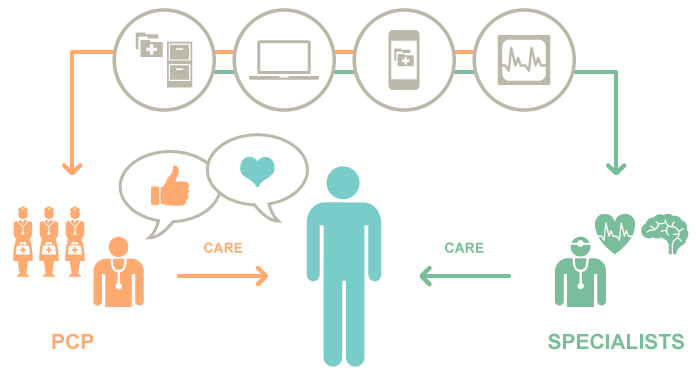
The patient‐centered medical home is a model for care provided by physician practices that seeks to strengthen the physician‐patient relationship by replacing episodic care based on illnesses and patient complaints with coordinated care and a long‐term healing relationship. Each patient has an ongoing relationship with a personal physician who leads a team that takes collective responsibility for patient care. The physician‐led care team is responsible for providing all the patient’s health care needs and, when needed, arranges for appropriate care with other qualified physicians. A medical home also emphasizes enhanced care through open scheduling, expanded hours and communication between patients, physicians and staff.

Based on emerging research, the medical home model has the potential to improve health outcomes and reduce overall costs. One way to fix the problem of spiraling health care costs is to try to change the health care system. It isn’t easy. It means completely changing the way everyone does business. But we can’t keep doing what we’re doing because things will just keep getting worse.

The problem is the way the health care system pays for care. It’s called a fee-for-service business model, and it hasn’t changed much since the start of modern health care. Under this model, doctors, hospitals, and other providers are paid for every service they provide – every visit, every test, and procedure they do – whether or not these things improve our health. It’s based on quantity instead of quality.

It can lead to unneeded tests, screenings, and other expensive care that adds to health care costs each year, without making people healthier and, in some cases, making them even less healthy. And it often results in doctors not having enough time to give the care they want to give. According to a recent study, a primary care provider (PCP) would need more than 22 hours a day to finish all of the work expected of them, whether giving care or doing paperwork.

To try to fix this system, insurers, hospitals, doctors, the government, and professional and trade groups are working together to change the way health care works. The major part of that effort is moving from the fee-for-service model to a new patient-centered medical home model. It’s kind of a weird name, but if you think about what it’s trying to do, it makes sense.

A patient-centered medical home, or PCMH, is not a physical building. It’s a way to care for patients so that you feel “at home” with your care. PCMH changes the emphasis from quantity to quality, helping everyone be healthier and reduce the need for costly care.

It’s been proven that when people have a long history with their PCP, they are healthier and have lower health care costs. Kind of makes sense, right? The better your doctor knows you and is aware of factors that might affect your health, such as stress, the more likely it is that diseases can be prevented or caught early, when treating them costs less and before they cause big problems. And as a bonus, when you have a good relationship with your doctor, you’re usually better informed about your health and lead a healthier lifestyle. It’s easier for a doctor who knows you well to effectively nag you!

A key goal of PCMH is to improve the relationship between you and your doctor. A big part of that is giving doctors the time they need to give that familiar level of care. So PCMH helps PCPs change their practices. They are put in charge of teams of providers customized to meet your unique health needs – so if you have a chronic condition, health care “extenders” with expertise in treating your condition could be on your team. The team may also include staff members and health and wellness organizations that offer education, screenings, and other support.

The PCMH system supports these teams with information and a new way to pay for care. Using the latest technology, like electronic health records, makes the team more efficient and improves communication. New detailed reports of patient histories help the team identify patients who need screenings, follow-up visits, and immunizations. That means your doctor and your whole team will have more information to better help you. It will also increase the coordination between different providers on your team. And instead of getting paid for every service they provide, providers are rewarded for making sure you get the right care you need when you need it. It’s about paying for quality.

HMSA members who have a primary care provider and a patient-centered medical home get recommended health screenings and immunizations at a higher rate than those without a PCP and PCMH.

But it’s not all up to the team. As the name implies, PCMH puts you at the center of your care, encouraging you to take an active role in improving and maintaining your health. After all, a team of doctors can only make recommendations. You are the only one who can make yourself exercise, eat right, get your recommended screenings and tests, take your medications as prescribed, and do what you need to do to manage any chronic conditions you have.

Heal Naturally

In Health, Healthcare, Medicine on May 19, 2012 at 4:25 pm

Heal Naturally

www.theworldofhealing.com

DID YOU KNOW THAT 75-80% OF HUMAN DISEASES
ARE CAUSED BY STRESS?

Get Better Health Naturally with

Magic Mat

Healing Grip

Healing Ball

Beyond Healing Tea

Healing Hypnotherapy