Let us Learn about Health and Healthcare

Posts Tagged ‘United States’

25 Ways to Sky-Rocket Patient Experience in any Medical Practice

In Health, Healthcare, Medicine on June 6, 2012 at 8:00 am

Most healthcare practices struggle on getting their bottom line met in current economic times with everyday changing healthcare trends. Very few of them are using some basic techniques to improve patient satisfaction and outcomes.  I have complied a list of 25 golden principles that a medical practice can adopt to improve their overall turnover and patient experience.

1. Remind patients of their upcoming appointment at least 24-48 hours prior.

2. Patients should be reminded of any paperwork to bring at the time of appointment.

3. Check-in process should be easy and quick.

4. Manage the schedule in a way that patients do not have to wait longer than 10-15 minutes.

5. Rooms should be well lighted.

6. Patients should be told about their vital signs in comparison to the old ones by the Medical Assistant when putting information in.

7. Staff should greet them with a smile.

8. Be a good listener.Let them finish their talking before you start talking.

9. Address the key issues and give specific written recommendations. Provide patient handouts when necessary.

10. It is good to address one more issue as a bonus. Patients feel good about it.

11. Follow up recommendations should be clear and concise.

12. Easy Checkout is must. If it is going to take some time, have patients sit in waiting area and address their needs as soon as possible.

13. Inform the patients of any abnormal labs and actions to be taken as soon as results are obtained.

14. Engage family members in case is Older patients and patients with special needs.

15. Try to know their social engagements. This makes them friendly.

16. Reassure, Manage and Recommend sensitively.

17. Review charts before patients visit so that you may mention what you talked about last time.

18. Offer Same day appointments.

19. Offer access to their own records including lab work and radiology reports.

20. Send them a Satisfaction survey to see what their experiences are and how you can improve.

21. Make them part of the decision-making. Always give them options when possible and guide them to choose one for themselves.

22. Send Periodic Health maintenance reminders. This include follow-up screening tests.

23. Provide Online resources and references to patients to get educated about their health conditions.

24. Have a well-designed and well informative website for the practice.

25. Most Importantly, be clear about your policies and procedures, what services you offer and what you don’t,  before even patient shows up, to avoid any surprises on patient’s end. Patients have  unreasonable expectations sometimes, which can be avoided by giving them clear understanding of what you can provide and what you cannot.

All the above mentioned tips are very easy to follow and the results are amazingly good. See your practice Sky-rocket in few weeks after applying these principles.

Facts about Fats

In Health, Healthcare, Medicine on June 5, 2012 at 8:00 am

“Did you see how much cholesterol this coconut milk has?”, my wife asked me while walking down the aisle for Asian food one day. She is one paranoid personality when it comes to cholesterol in food items. At times she starts an argument about saturated and unsaturated fats although she has no clue as to what they are. And then comes the challenging part to
explain her the dynamics of cholesterol. But I enjoy those discussions as I learn a lot with the curiosity of hers.
Cholesterol is a part of lipids which is the scientific term for fats in the blood. At adequate
levels, lipids perform important cellular functions in your body, but can cause health problems if they are present in excess.
Concerning lipids are mainly cholesterol and triglycerides.
Hyperlipidemia, along with diabetes, hypertension (high blood pressure), positive family history, and smoking are all major risk factors for coronary heart disease.
Who gets it? obese, smokers,and those who don’t like to get up and exercise. Medical  conditions that cause   hyperlipidemia include diseases like diabetes, kidney disease,pregnancy and underactive thyroid gland. You can also inherit hyperlipidemia. The cause may be genetic if you have a normal body weight and other members of your family
have hyperlipidemia. You have a greater chance of developing hyperlipidemia if you are a man older than age 45
or a woman older than age 55. If a close relative had early heart disease (father or brother affected before age 55, mother or sister affected before age 65), you also have an increased risk.
Symptoms: None. You would never know it until you get adverse effects because of that. So why do I care? You better care about this because you could be the one getting a heart attack or a stroke before even knowing whats happening. Hyperlipidemia causes atherosclerosis which is hardening of the blood vessels, thereby compromising blood supply
to major organs like heart and brain.
So how do I know if I have high lipids? Blood test. The National Cholesterol Education Program recommends that people get this test every 5 years after age 20. Your blood test will show your physician the levels of different lipids in your blood which will help him decide how aggressively you need to be treated. Most blood tests measure levels of LDL (bad cholesterol) cholesterol, HDL (good cholesterol), total cholesterol (LDL plus HDL), and triglycerides. Current national guidelines suggest a LDL cholesterol goal of <100 mg/dl for individuals already with heart disease or
diabetes, <130 mg/dl for those with moderate risk of heart disease, and <160 mg/dl for everyone else. Your doctor can calculate your risk score for heart disease. This score can then be used to determine whether you need to start taking medications to lower your LDL cholesterol.
Although there are no firm treatment targets for HDL cholesterol or triglycerides, most experts agree that optimal HDL cholesterol and triglyceride levels are >40 mg/dl and <200 mg/dl, respectively.
What’s the treatment? Lifestyle modifications is the most important step to lower the lipid levels. I know some people don’t like to do it, but you need to get up and do some exercise. When it comes to eating right and exercising, there is no “I’ll start tomorrow.” Tomorrow is disease. Change your dietary habits. You should replace foods high in
saturated fats(the majority come mainly from animal sources, including meat and dairy products) with foods high in monounsaturated and/or polyunsaturated fats(vegetable oil, fish, nuts, legumes, etc). A humorous patient once said to me, “They claim red meat is bad for you. But I never saw a sick-looking tiger.” I wish I had an answer to his argument.
Stop smoking. Smoking can lower HDL, narrow your blood vessels, and injure your blood vessel walls. All of these effects can speed hardening of the arteries.Try to lose some weight. Therapeutic lifestyle changes can lower total cholesterol by 10 to 20 percent in some people. More commonly, however, people with hyperlipidemia experience a 2 to 6 percent reduction from TLC. If TLC doesn’t help, its time to start some medication which your doctor will decide for you. Lipid-lowering medications include Statin drugs (which prevent your liver from manufacturing cholesterol), Bile acid sequestrants, (which prevent your body from reabsorbing the cholesterol in bile. Bile is a liquid secreted into your small
intestine that helps you digest dietary fats), Fibrates and Niacin.
So, its never too late. Lets work on it. Remember, the best six doctors anywhere are sunshine, water, rest, air, exercise and diet.

Doctor’s Story: Not much Glory

In Health, Healthcare, Medicine on June 3, 2012 at 9:35 am

Sleepless Nights,Big Bright lights,
I made books and blood my friends,
Had to know all the current trends.
I cried a lot,I suffered a lot,
Throughout the journey, I did not leave the plot.
Serving is my mission,Care is my vision.
Even with the pain, medicine is my passion.
I stayed far from my family, did not get all the love,
I touched the disease many times without the glove.
I may seem to be making money,
But do not forget that I have to leave my honey.
I get up early and sleep very late,
Just to make sure that I change your fate.
I hold your hands when you need,
Forgetting at times that I need to feed.
I love what I do,
But still fear the ‘Sue’.
I am the one,
On the run.
Never Tired,
Always Hired.
When I get calls
For somebody who falls
I get up to make you stand
Always greet you by shaking hands,
I may fly wavy like a helicopter,
Believe it or not, I am your Doctor.

DOCTORS GO THROUGH A LOT TO MAKE YOU FEEL BETTER.
SO, APPRECIATE THEIR WORK !

Reflexology: A Powerful Healer

In Health, Healthcare, Medicine on May 29, 2012 at 1:37 pm

Reflexology

Reflexology is a form of Alternative Medicine which is based on the principles that there are reflexes in the feet, hands and ears and their referral areas within zone related areas, which correspond to every part, gland and organ of the body. Our energy is channelized through various electrical circuits in body. When pressure is applied to a particular point, the energy gets channelized through those circuits and relives any blockages that may be in its path and ultimately results in healing.

For example, if somebody is suffering from shoulder pain, gentle pressure over the areas over feet and hands that correspond to shoulder would relieve the symptoms.

 What can it help with?

*Relieves Pain
*Reduces Stress
*Improves Circulation
*Improves Digestion
*Promotes Heart health
*Improves Vision
*Improves Mood
*Promotes Relaxation

Benefits

  • It is a medication free therapy
  • No side effects
  • Instant results
  • Natural way of healing
  • Multiple areas can be stimulated with healing gadgets at the same time to get overall relief
  • It can be done by yourself

How to do it?

There are many fancy products available in the market. But to cut some costs, the simplest thing you can use is a comb. Just hold it in the hands and push on the spikes in all areas of the palm for 10-15 minutes daily and feel the magic.

You can also try the Healing Ball and Healing Grip as shown above which are excellent products for reflexology.

http://www.theworldofhealing.com/#!healing-gadgets

ALL YOU NEED A POSITIVE ATTITUDE.

Reflexology is not intended to be a substitute for medical care. Consult a medical professional for any health problem.

Narcotics: Pain Killer or PAIN itself?

In Health, Healthcare, Medicine on May 24, 2012 at 3:04 am

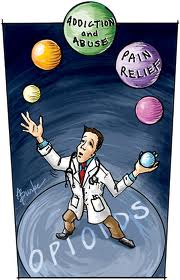
Narcotics/Opioids have been used since the beginning of recorded history. Opium is derived from a white liquid produced by the poppy plant, first cultivated in the Middle East and Asia. It was used therapeutically in ancient cultures to induce calm and to relieve pain, and recreationally to induce euphoric dream states. Today, physicians prescribe narcotics for pain relief. Whether plant derived (natural) or synthetic, narcotics are sometimes still referred to as opioids.

Narcotics  produce intense pleasure and general calmness:

  • Drowsiness, tranquilization, or sleep
  • Feeling of well-being
  • Pain relief (analgesia)
  • Temporary euphoria; a “high”

Addiction to opioids (e.g., heroin, morphine, prescription pain relievers) is a serious global problem that affects the health, social, and economic welfare of all societies. An estimated 12–21 million people worldwide abuse opioids, with 1.9 million people in the U.S. addicted to prescription opioid pain relievers in 2010 and 359,000 addicted to heroin. Consequences of this abuse have been devastating and are on the rise. For example, the number of unintentional overdose deaths from prescription pain relievers has soared in the U.S., quadrupling since 1999.

Opioids act on specific receptors in the brain and the body, which also interact with naturally produced substances known as endorphins or enkephalins – important in regulating pain. While prescription pain relievers can be highly beneficial if used as prescribed, opioids as a general class of drugs have a high potential for abuse.

Risk Factors for Abuse

Psychological and environmental risk factors for narcotic use include the following:

  • Antisocial and experimental attitudes (i.e., rebellious nature) during adolescence
  • Environmental factors
    • Family problems
    • Gang membership
    • Inner-city culture
    • Poverty
    • Wealth or disposable income
  • Family history of substance abuse and drug addiction
  • Low self-esteem

From a physician standpoint, it is very challenging to offer opioids to certain patients. I am constantly seeing patients who come to see me to get pain meds, but get disappointed when I decline their request. When a patient asks me to prescribe/refill pain meds, that is a ‘Red Flag’ right there. If they have a problem, severe enough, that they have to take narcotics, how come they do not complain of pain first. People who do complain of so called ‘severe pain’ do not have a significant evidence to prove their pain. The other ‘Red Flag’ is when patients tell me that no other medications including OTC Tylenol/ibuprofen or prescribed meds like tramadol  work. They always have excuses. Unfortunately, internet and social media have given them enough information to fool the system easily. They know what to tell  the healthcare providers to bypass the interrogation step.

It will be a surprising fact for most of us that Narcotics are not available in a lot of countries. Even if they are in some, they are reserved for post-operative  and cancer pain management. So, how come people in those countries survive that much pain level.

We provide certain resources in the society without weighing the importance and need for it. We automatically judge that the ‘Supply and Demand’. The US society is bombarded with addictive medications and the consequences are fatal and costly. No wonder, our healthcare system is totally shattered. We aim to spend billions of dollars over patient safety and clinical outcomes. But legally, no significant steps are taken to avoid people from selling those prescription drugs to the innocent teenagers who have a rocky life to face ahead.

I get threatened and confronted by a lot of patients when they desire narcotics without any hastle. But as soon as they realize that  I will be giving them a good fight, they understand the problems they are in. Counseling helps, but most of the times it is too late. Secondly we do not have adequate resources to help those people in need for care. Genuine patient’s want their pain to be managed well. they do not care what category medications they are being prescribed.

We see many physicians getting into trouble for overusing their power to prescribe narcotics. They do not realize the kind of society they are creating. A selfish thought to make money blinds them and they do not see the dangers involved.

Personally, I feel these medications should be only reserved for post-operative and cancer pain management. A few other scenarios can be added if the evidence of cause of pain is well established.

So, overall, I feel it is more painful to manage pain with narcotics, from both a patient’s and physician’s perspective. i hope we come up with better pain management drugs soon, to help the society.

INTRODUCTION TO HEALTHY AND HAPPY LIFE

In Health, Healthcare, Medicine on May 22, 2012 at 11:06 pm

Not long ago was a day when I was practicing medicine in the rural part of India. And now I see myself struggling with issues in rural part of America. There is a small similarity, and a
huge difference. Although both are considered ‘rural’, which of course is a verbal similarity,the problems are completely different. The horizon has changed tremendously from
malnutrition, and infectious diseases, to hypertension, high cholesterol, and obesity. For people in rural India, these are considered as ‘Rich Man’s diseases’.
I started of my career in India after finishing my medical school in a small town. Working at the grass-root level with no tertiary care tools was not only challenging, but also an
experience to be on the other side and realize how lucky we are to be in 21st century with so much technology. It is an eye opener for every physician who works in rural conditions
because you come across situations where you find ‘primitive’ ways of doing things, where you are supposed to act as ‘Jack of all trades’.
After an year of rural medicine, I thought to be progressive and moved myself to more urban style medicine which was a big change all of a sudden. Things were more streamlined
and work was more delegated as compared to rural medicine. I nurtured my medical abilities in Urban Medicine and gradually got into this notion of extending my horizon to different corner of the world, United States of America. America is known to be a country of opportunities and I found one for myself in Baltimore, Maryland. I started over as a medical resident in Internal Medicine, and it was not too long when I realized that I am totally used to so called ‘Advanced Medicine’. In my 2nd year of medical residency, I thought of re-nurturing  my interest in Rural Medicine and was fortunate to find one.
Since then, I am working in this part of the world which is very rewarding and satisfying. As part of American medicine now, I thought of addressing some issues, which I come across on a daily basis.
Who is the target population? ‘Everyone, including me’. Because before being a doctor, I am a common man with the same kind of problems as everyone else struggles on a day to day basis. So, I will be learning with you all and try to simplify some complicated health related issues, to relieve the stress of how to take care of ourselves. The goal is to understand that the change begins from within. Nobody has the capacity to change you for the better, but
yourself. Things don’t get better just by thinking about them, action is what is required to make the change happen.
For most of us, happiness means lots of money, a high-powered job, a picture-perfect family, a big extravagant home and a beautiful body. But by the end of the day what matters is satisfaction with whatever is going on in your life. People ask what happiness is? It is nothing but ‘satisfaction’. Just take a minute and try to remember some moments in your life when you were very happy. They were nothing but the times you were satisfied which could be anything like good scores in class, driving your dad’s car for the first time, finishing the long awaited project at work, giving a hand to the old lady with her grocery bags, etc. Believe it or not,but inner happiness plays a great role in your health. It’s the food for good health. You cannot be healthy just by working out for 1 hour in a gym everyday, taking the most expensive dietary supplements in the market and getting 8 hours of sleep. You have to achieve your mental and social goals also.

According to WHO, health is a state of complete physical, mental and social well-being and not merely the absence of
disease or infirmity. Remember when you had a toothache, the flu, or a migraine. Remember the relief you felt
when you first started to feel better? Until we are sick, we rarely appreciate how good it feels to feel well. Be glad you are well. Everyone knows that healthy mind lives in a healthy body. So lets work together on some health related practices that will help us achieve our physical goals, inner peace, and comfort. I need your help to help you get towards those goals.

Healthcare in US: When is it going to be Cost Effective?

In Health, Healthcare, Medicine on May 20, 2012 at 11:04 pm

It is important as a healthcare consumer to understand the history of the healthcare delivery system, how it operates today, who participates in the system, what legal and ethical issues arise as a result of the system, and what problems continue to plague the healthcare system.  We are all consumers of healthcare.  Yet, in many instances, we are ignorant of what we are actually purchasing.  If we were going to spend $1000 on an appliance or flat screen television, many of us would research the product to determine if what we are purchasing is the best product for us.  The same state should be applied to purchasing healthcare services.

As the United States resumes debate over options for achieving universal health coverage, policymakers are once again examining insurance systems in other industrialized countries. More recent attention has focused on countries that combine universal coverage with private insurance and regulated market competition.

A Basic Screenshot of what US healthcare is Comprised of

Medicare: Medicare is a social insurance program for the elderly, some of the disabled under age 65, and those with end-stage renal disease. Administered by the federal government, the program is financed through a combination of payroll taxes, premiums, and federal general revenues.

Medicaid: Medicaid is a joint federal-state health insurance program covering certain groups of the poor. Medicaid is administered by the states, which operate within broad federal guidelines. States receive matching funds from the federal government, varying among states from 50 percent to 76 percent of their Medicaid expenditures.

Private insurance: More than 1,200 not-for-profit and for-profit health insurance companies provide private insurance. They are regulated by state insurance commissioners. Private health insurance can be purchased by individuals, or it can be funded by voluntary premium contributions shared by employers and employees on an employer-specific basis, sometimes varying by type of employee. Employer coverage is the predominant form of health insurance coverage. Some individuals are covered by both public and private insurance.

Out-of-pocket spending: Out-of-pocket payments, including both cost-sharing insurance arrangements and expenditure paid directly by private households, accounted for 12 percent of total national health expenditures in 2007, which amounted to US$890 per capita.

Based on the fragmented development of US health care, the system is based on individualism and self-determination and focusing on the individual rather than collectivistic needs of the population. For example, there are over 20 million citizens who have type 2 diabetes, a chronic and serious disease that impacts how your body breaks down food to obtain energy. This chronic disease has severe complications if not treated appropriately. Unless something is done to prevent this insidious disease, there will be 35 million heart attacks, 13 million strokes, 8 million instances of blindness, 2 million amputations, and 62 million deaths over the next 30 years.

Both private and public participants in the US health delivery system need to increase their collaboration to reduce these disease rates. Leaders need to continue to assess our healthcare system using the Iron Triangle to ensure there is a balance between access, cost, and quality.

Although the Health Care Reform intends to take away the flaws the current system is infested with, the journey is going to be long and tough. But it will  definitely lead to a better outcome as compared to current situation.

Heal Naturally

In Health, Healthcare, Medicine on May 19, 2012 at 4:25 pm

Heal Naturally

www.theworldofhealing.com

DID YOU KNOW THAT 75-80% OF HUMAN DISEASES
ARE CAUSED BY STRESS?

Get Better Health Naturally with

Magic Mat

Healing Grip

Healing Ball

Beyond Healing Tea

Healing Hypnotherapy